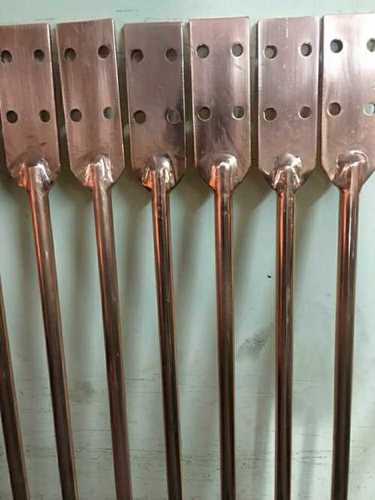
We, PS Enterprises are manufacturing company of solar panel mounting structure and accessories, company located at the India’s one of the fastest growing city Ludhiana Punjab India.. Our company is always believed in the research and development of new products.
Earthing material refers to the components used to create an electrical grounding system, also known as an earthing system, which ensures the safe dissipation of electrical energy into the ground. This is crucial for protecting electrical equipment, systems, and people from electrical faults, like short circuits or lightning strikes. It provides a path for the current to flow into the earth, minimizing the risk of electrical shocks, fires, and damage to electrical installations.
Copper Bonded Rod
LA Lighting Arrester
Copper Bonded Solid Rod
Earthing Rods:
Copper or galvanized steel rods are inserted deep into the ground to make contact with the earth. These rods should be corrosion-resistant and long enough to ensure a good connection with the ground, usually measuring between 2 to 3 meters in length.
Earthing Plates:
Copper or galvanized iron plates are also used as electrodes for grounding systems. These plates are typically buried horizontally in the earth at a specific depth to ensure maximum contact with the soil. They provide a larger surface area compared to rods, which helps in reducing resistance.
Earthing Wires/Conductors:
Copper wire or aluminum wire is often used to connect the grounding electrode to the electrical installation. The size of the wire is chosen based on the current-carrying capacity required for safe operation.
Earthing Compounds:
Sometimes, earthing compounds (a mixture of salts and chemicals) are used to reduce the soil’s resistance. These compounds are particularly useful in dry or rocky soil, where natural conductivity is low. These compounds help maintain a low-resistance connection to the earth, ensuring effective grounding.